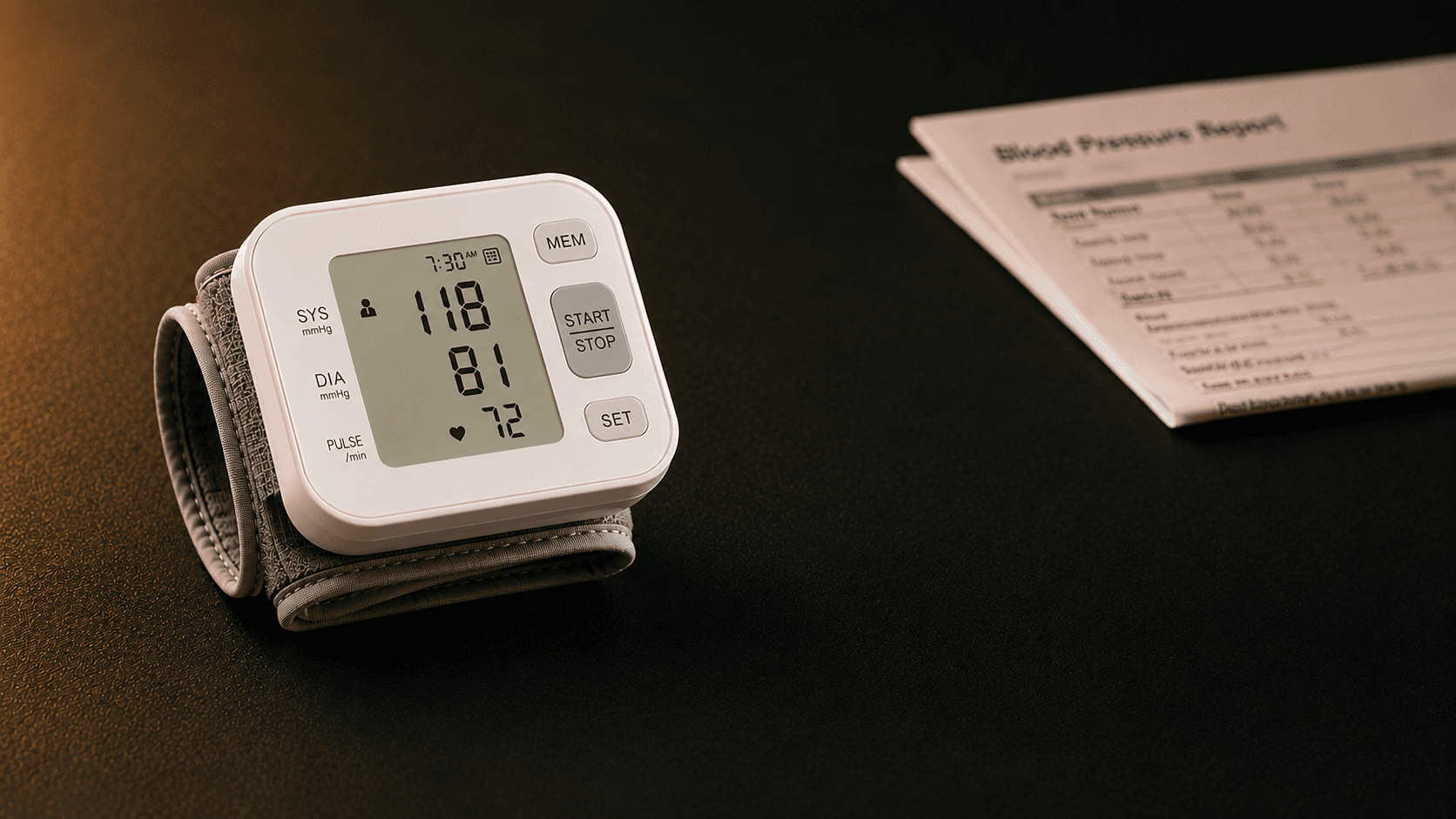
AI-Driven Remote Patient Monitoring App for Chronic Care Management
- 20%
- 150+
Healthcare software fails in one of two ways: it passes the compliance review but clinicians won't use it, or patients love it but the compliance team kills it at launch. We build for both constraints from the start.
Patient portals, telehealth apps, and mobile health platforms built for engagement and compliance
Clinical workflow software that fits how your team actually delivers care, not a generic EMR module
HIPAA-aware architecture, data handling, and audit trail built in from the start
100+ products shipped including healthcare platforms, patient apps, and clinical data tools
Recognition
EHR integration scoped for 3 months because your team didn't anticipate what Epic's API actually exposes versus what the documentation promises?
Clinicians spending 2+ hours on documentation for every hour of patient care because the workflow your software enforces doesn't match how care is actually delivered?
In short
RaftLabs builds custom healthcare software including patient portals, clinical workflow tools, telehealth platforms, care coordination systems, and digital therapeutics, for health systems, digital health startups, and healthcare operators. All platforms are built with HIPAA requirements in mind from day one. We deliver a basic patient portal in 12–20 weeks and a telehealth platform in 16–28 weeks, at a fixed cost, with source code ownership and post-launch support included. A basic patient portal starts around $30k; an AI-enabled remote patient monitoring system runs $220k+. Clients report 20% faster clinical decisions and a 60% reduction in in-person visits after launch.
01 Diagnosis
Your compliance team is blocking launch
When PHI flows through systems that weren't architected for it, the compliance review finds everything: API calls that log request bodies, third-party services without BAAs, local device storage that persists between sessions. The rework cycle is expensive. Encryption retrofitted after build, access controls redesigned, and audit logging added as an afterthought can add weeks of unplanned work and delay your launch. A compliance architecture designed from sprint one avoids all of that. PHI handling, role-based access, audit trails, and BAA coverage for every infrastructure provider are scoped during discovery and built into the definition of done for every feature. "PDC has been a great addition to our clinic. It is easy to navigate, and as a remote patient monitoring app, it helps us stay connected with senior patients who cannot visit regularly.", Dr. Smith, Primary Care Physician
Your clinicians spend two hours on documentation for every hour of care
According to the Medscape Physician Burnout and Depression Report (2023), physicians spend more than 15.5 hours per week on paperwork and administrative tasks, with nearly two-thirds citing excessive charting as a top contributor to burnout. Documentation burden is one of the leading drivers of clinician burnout, and the hidden cost shows up in overtime, staff turnover, and reduced patient throughput. When clinical notes are typed manually after the encounter, when prior authorization forms require re-entering data already in the EMR, when handover notes go into a system that doesn't connect to the receiving team's tools, every one of those friction points steals time from patient care. Clinical workflow software designed around how your team actually delivers care, not around a generic EMR template, cuts documentation time and keeps data in the system of record.
Your remote monitoring data arrives but no one acts on it
RPM platforms that generate alerts on every reading outside a population norm create alert fatigue fast. Clinicians stop acting on alerts when most of them are false positives. The result is a monitoring system that collects data but doesn't change clinical decisions, which means you're paying for infrastructure that isn't improving outcomes. Risk stratification that scores patients against their own individual baseline, not just population averages, separates genuine deterioration signals from noise. Providers act on flagged cases rather than reviewing all incoming data, and teams using this approach have cut clinical decision time by 20%.
Your patient portal has low adoption
Patient portals with adoption problems almost always have the same root causes: too many clicks to book an appointment, results that display without context, and messaging that doesn't feel like messaging. When patients default to calling the office for things the portal was supposed to handle, the efficiency gain disappears and your front-desk staff are still fielding the same call volume. Patient-facing software designed for the patient's mental model, not the practice management system's data structure, drives adoption that sticks.
02 What we ship
Patient-facing apps for appointment booking, test results, medication reminders, care plan tracking, and provider messaging. We handle HIPAA-compliant data handling, user authentication, and consent management throughout. Designed for the patient who doesn't want to deal with a complicated portal, so adoption goes up and call volume to your front desk goes down.
Video consultation platforms, asynchronous messaging, and remote monitoring integrations. We build HIPAA-compliant video infrastructure, end-to-end encrypted messaging, and documented data flows. Built for the workflows your clinicians actually follow, so your team isn't adapting care delivery to fit the software.
Custom clinical tools that fit how your team delivers care: care plan management, task assignment, handover workflows, escalation alerts, and clinical documentation. We integrate with your EMR so data stays in the system of record. The workflow layer that handles what your EMR can't, so clinicians stop working around the system.
Software-based therapeutic interventions, CBT programs, chronic disease management apps, rehabilitation tracking, and behavioural health platforms. Outcome measurement is built in from the start. We consider FDA software classification in the design, which matters when you're building evidence-based software products and need a clean regulatory path.
Clinical data pipelines, population health analytics, outcome dashboards, and regulatory reporting. Data from EMRs, wearables, and IoT devices gets aggregated into something your clinical and operational teams can actually use to make decisions. HIPAA-compliant architecture with de-identification where research use requires it.
We automate the administrative and operational workflows that don't need a clinician: prior authorisations, appointment reminders, document routing, insurance verification, and billing data preparation. Your clinical staff spend less time on admin and more time on patient care.
03 How we work
Two to three weeks working with your clinical, legal, and compliance team to map PHI handling requirements, infrastructure BAA coverage, EMR integration points, and audit logging specifications. This step surfaces requirements that would cause rework if discovered mid-build. We define exactly what HIPAA-aware architecture looks like for your specific system before any code is written.
We design the data model around your compliance requirements: encrypted storage schema, role-based access control matrix, audit log structure, and integration layer for EMR systems. For AI components, model selection and PHI anonymisation architecture are locked before the first AI feature is written. EMR integrations are prototyped in sprint one because they're the highest-risk dependency.
Two-week sprints where compliance requirements are part of the definition of done for every feature. Features don't ship until the security review for that feature is complete. You review working software at each sprint, not wireframes. The compliance documentation package for your team is assembled throughout the build, not produced as a final deliverable.
Internal code review and security testing run throughout the build. External penetration testing runs against the production environment before launch. We deliver a documentation package for your compliance team: data flow diagrams, infrastructure architecture with BAA coverage mapped, access control matrix, and audit log format specifications.
Companies we've built for







04 Track record
06 Client voices
Three-year average engagement. Founders and operators describing the work in their own words. No marketing varnish.
 USA
USAPDC has been a great addition to our clinic. It is easy to navigate, and as a remote patient monitoring app, it helps us stay connected with senior patients who cannot visit regularly.
01 / 02
07 Why us
Every feature ties to a specific business goal. You get what you need to launch. Not a bloated spec that takes twice as long and ships half-baked.
Production fire at 11pm? We're there. We take ownership, fix fast, and keep your business running when it matters. No hiding behind tickets.
If the idea won't work, we say so before a line of code is written. Honest advice saves you more than a team that nods along.
08 Questions
HIPAA-aware development means building the technical safeguards that HIPAA requires into the software architecture from the start, not adding them after. This includes data encryption at rest and in transit, role-based access controls with minimum necessary access, audit logging of all access to protected health information, business associate agreement (BAA) coverage for all infrastructure providers, and documented data flows for your compliance review. We don't offer HIPAA compliance certification. Only your compliance team can assess that. We build the technical foundations that make compliance achievable.
Yes. EMR integration is one of the most common requirements for healthcare software. We've integrated with Epic (FHIR R4 APIs), Cerner (Millennium and PowerChart APIs), Athenahealth, and smaller regional EMR systems. The integration approach depends on what the EMR exposes: FHIR APIs where available, HL7 feeds for older systems, and flat-file exchange as a last resort. We scope the EMR integration during discovery because it's usually the most complex and the highest-risk part of the project.
Mobile health apps need the same compliance foundations as web platforms, plus considerations specific to mobile: secure local storage, certificate pinning for API calls, and app store compliance for health-related apps. We build iOS (Swift) and Android (Kotlin) native apps and React Native cross-platform apps depending on your requirements. For apps that handle PHI, we design the data handling architecture so PHI is never stored locally on the device longer than necessary.
Healthcare app development typically ranges from $30,000 for a basic patient portal to $220,000+ for an AI-enabled remote patient monitoring system. The compliance layer adds 20–30% to the cost of equivalent non-healthcare software. EHR integration complexity is the largest cost variable: FHIR API integrations are straightforward; legacy HL7 systems require more custom work. We provide fixed-cost delivery after a discovery phase that scopes the full compliance and integration requirements.
Timeline depends on scope and EMR integration complexity. A basic patient portal takes 12–20 weeks. A telehealth platform takes 16–28 weeks. An AI-enabled RPM system, our most complex healthcare project type, takes 24–40 weeks. The discovery and compliance scoping phase (2–3 weeks) runs before the build and cuts rework risk significantly. EMR integrations are the most common cause of timeline delays, which is why we prototype them in the first sprint.
Custom healthcare software development
patient portals, clinical workflow tools, EHR integration, HIPAA-aware
Telemedicine app development
video consultation, scheduling, asynchronous telehealth, EMR integration
Healthcare mobile app development
mHealth, digital therapeutics, clinical workflow apps
mHealth app development
chronic disease management, mental wellness, wearable integration, medication adherence
Remote patient monitoring software
RPM platforms, device integration, CPT billing
Patient portal development
appointment booking, test results, secure messaging, care plans
EHR/EMR software development
custom EHR, FHIR R4, clinical documentation, e-prescribing, billing
AI agents for healthcare
prior auth automation, clinical documentation, care gap outreach, scheduling
AI chatbot for healthcare
patient triage, symptom checking, appointment booking, HIPAA-aware
Healthcare workflow automation
prior auth, scheduling, document routing, insurance verification
HIPAA compliant development
technical safeguards, encryption, audit logging by design
Revenue cycle management software
eligibility verification, claims scrubbing, denial management, payment posting, patient billing
Hospital management software
bed management, staff scheduling, pharmacy, lab integration, billing, operations dashboards
Medical device software development
SaMD classification, companion apps, telemetry platforms, FHIR integration, FDA cybersecurity
AI in healthcare
clinical documentation, prior auth automation, predictive analytics, patient triage, AI medical coding
Healthcare app development cost
cost guide, honest ranges by app type
Telemedicine app development cost
cost guide, honest ranges for telehealth builds
Telehealth for mental health
teletherapy platforms, HIPAA-compliant video, asynchronous messaging
Telehealth for primary care
virtual consultations, e-prescribing, EHR integration for primary care
Telehealth for dermatology
store-and-forward, live video, image capture for dermatology telehealth
Telehealth for psychiatry
HIPAA-compliant video, clinical documentation, psychiatric workflow tools
Voice AI for healthcare
ambient clinical documentation, patient triage, appointment booking by voice
Prior authorization software
automated prior auth workflows, payer API integration, status tracking
Mental health software
teletherapy, HIPAA EHR, outcome tools, group sessions
Physical therapy software
SOAP notes, exercise programmes, outcome tracking, telehealth
Dental practice software
scheduling, charting, insurance billing, recall, loyalty
Veterinary practice software
appointment booking, medical records, pharmacy, wellness plans
MedSpa software
appointment booking, loyalty/membership, HIPAA records, before/after photos
Tell us what you're building, who the users are, and your compliance requirements. We'll tell you how we'd approach it.